
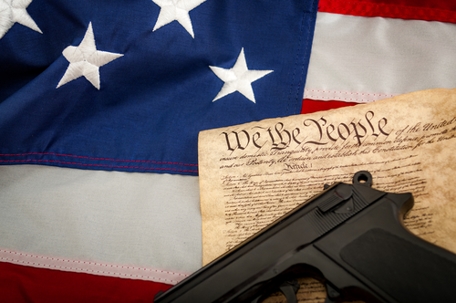
Nearly half of all U.S. households own a firearm, making gun rights and gun laws a topic people discuss every day. In a recent conversation, attorney Christina Williams, legal storytelling specialist David Mann, and former Wyoming narcotics sergeant Tony Seeman broke down what gun owners need to understand about the Second Amendment and how a recent Supreme Court decision has shifted the landscape.
A Major Supreme Court Decision on Concealed Carry
A little over a year ago, the U.S. Supreme Court issued a significant ruling involving New York’s concealed carry laws. New York had used a subjective standard, requiring applicants to prove they had a “special need” for a concealed carry permit—such as evidence of a recent threat.
The Supreme Court struck that down.
The Court held that states cannot rely on subjective standards when deciding who receives a concealed carry permit. Instead, any requirements must be objective and tied to historical traditions surrounding the Second Amendment. The ruling also reaffirmed that the right to bear arms is not limited to the home.
How States Differ on Permits
Gun laws still vary widely across the nation:
- 21 states require a permit for concealed carry
- 29 states allow permitless concealed carry
Wyoming, for example, does not require a permit—though many residents still voluntarily complete training and background checks.
Background Checks and Eligibility
According to investigator Tony Seeman, even in states that allow permitless carry, gun ownership still has federal restrictions. You may be prohibited from possessing a firearm if you:
- Are a convicted felon
- Have certain qualifying mental health adjudications
- Have domestic violence convictions
- Are subject to certain protection orders
- Are on probation in many cases
A standard federal background check is designed to identify these disqualifying factors.
Do People Need Classes or Licensing?
Tony offered a clear personal opinion: background checks are necessary, but additional classes or licensing should not be required to exercise a constitutional right.
However, he notes that many people still choose to take safety courses—both to learn responsible firearm handling and to better understand the legal consequences of misuse.
What This Means for Gun Owners
Most people don’t expect to interact with law enforcement—or need to use a firearm in self-defense. But understanding the law before a situation arises is crucial.
The key takeaways:
- The Second Amendment protects your right to bear arms beyond the front door.
- States may require objective criteria, but not subjective “special need” requirements.
- Federal law still restricts who may legally possess a firearm.
- Gun owners benefit from education, even when it isn’t required.
If you find yourself facing charges involving firearms, concealed carry, or possession restrictions, the team at Just Criminal Law is here to help you protect your rights and your future.